Tropilaelaps spp.
Scientific Reference Poster
The mite scientists are watching more closely than Varroa. Original field photography from Thailand. Every claim sourced to peer-reviewed literature through 2024. 17 × 22 inches — print-ready.
Get the poster
The science behind the poster
Every claim is sourced. Nothing is guesswork.
This is not a general-audience summary. The poster was built from primary literature — the same papers researchers use — and every biological claim is traceable to a specific study.
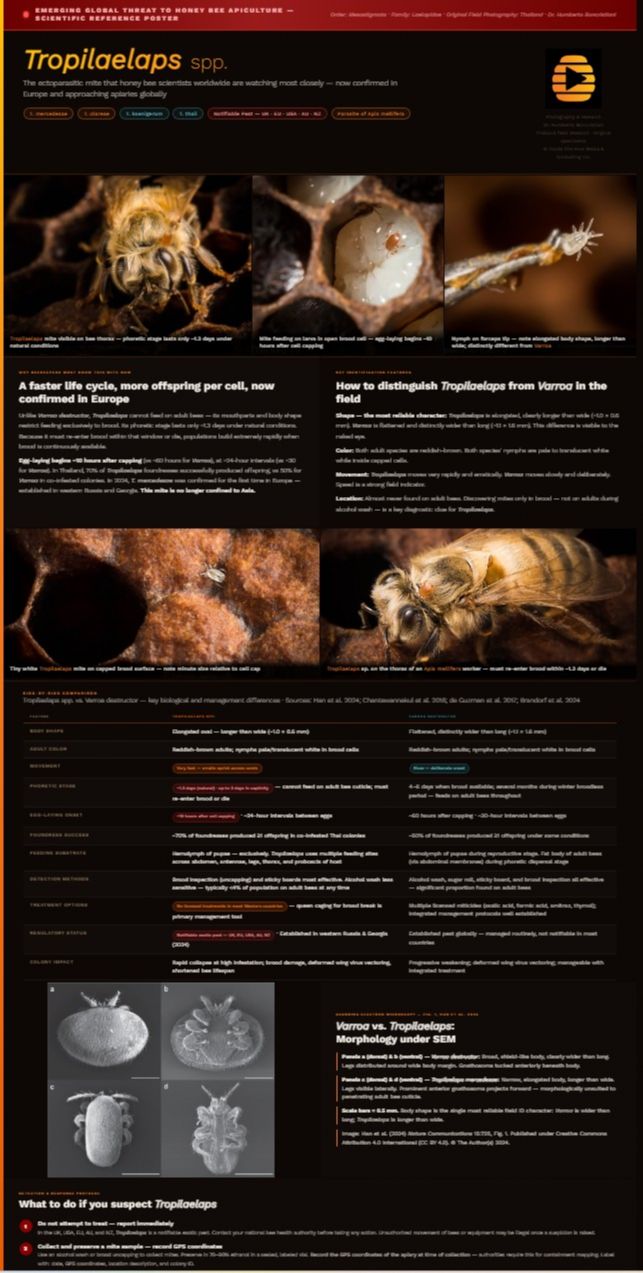
The feeding biology section reflects Han et al. 2024 (Nature Communications), which overturned the previous understanding of how these mites feed. The range panel reflects Brandorf et al. 2024, the first published confirmation of T. mercedesae establishment in Europe.
The SEM morphology image is reproduced under Creative Commons CC BY 4.0 from Han et al. 2024. All field photography is original.
~1.3
10h
70%
2024
What's on the poster
Everything a beekeeper needs to know — in one place
Six research-backed sections. Original photography. Built for beekeepers who take science seriously.
Species Identification
Reproductive Biology
Feeding Biology
Detection Methods
Response Protocol
Global Range — 2024
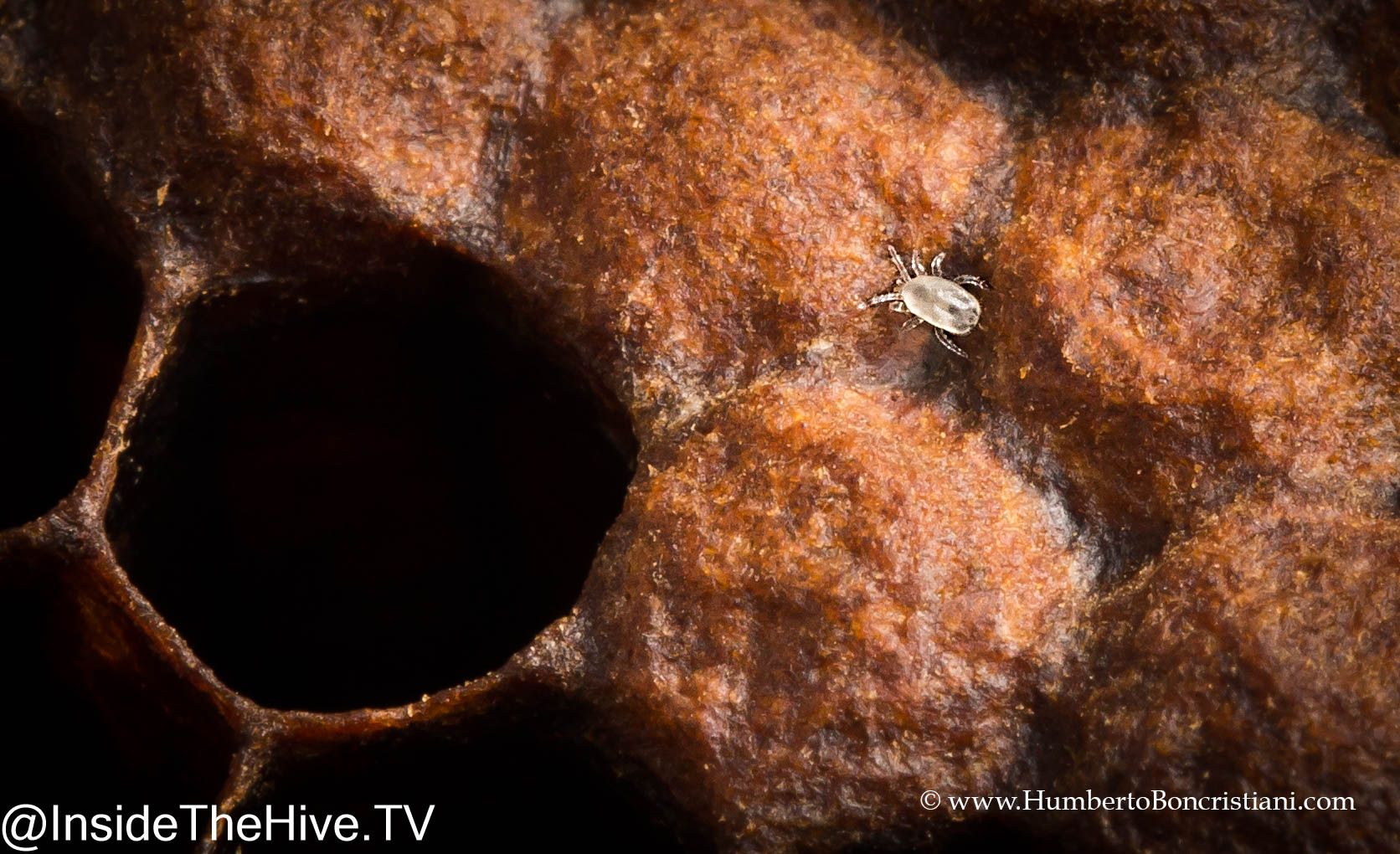
Built by a researcher who was there
Dr. Humberto Boncristiani is a honey bee researcher who has worked at U.S. universities and federal research institutions. He founded Inside The Hive TV to make peer-reviewed bee science accessible to working beekeepers worldwide.
The photography in this poster was taken during his own field research in Thailand — original specimens, original images. Nobody else has this material.
InsideTheHive.TV · IHTV Academy · IHTV Newsletter
Get the poster now
$14.00
Instant PDF download
17 × 22 inches · Print-ready